As urban infrastructure continues to evolve, the engineering behind DI
drainage manhole covers and frames becomes more critical. One of the key
decisions is whether to use ribbed or plain ductile iron drainage frames.
The choice affects load-bearing capacity, stability, lifespan, and safety in
roads, industrial zones, and coastal areas.
In this blog, we’ll explore the differences, advantages, and applications of
ribbed vs. plain ductile iron drainage products, helping you make informed
infrastructure decisions.
Ribbed vs. Plain DI Manhole Cover Frames: Which Offers Better Strength, Stability & Longevity?
What Are Plain DI Drainage Frames?
Plain ductile iron drainage frames feature smooth, uniform surfaces without extra reinforcement. They are simple in design, lightweight, and ideal for low- to medium-load areas.
Features of Plain Frames:
- Smooth outer body
- Cost-effective solution
- Lightweight and easy to install
- Suitable for pedestrian areas or light traffic zones
Plain frames work reliably in residential streets, parks, and areas with controlled traffic loads, providing adequate support for ductile iron manhole covers.
What Are Ribbed DI Drainage Frames?
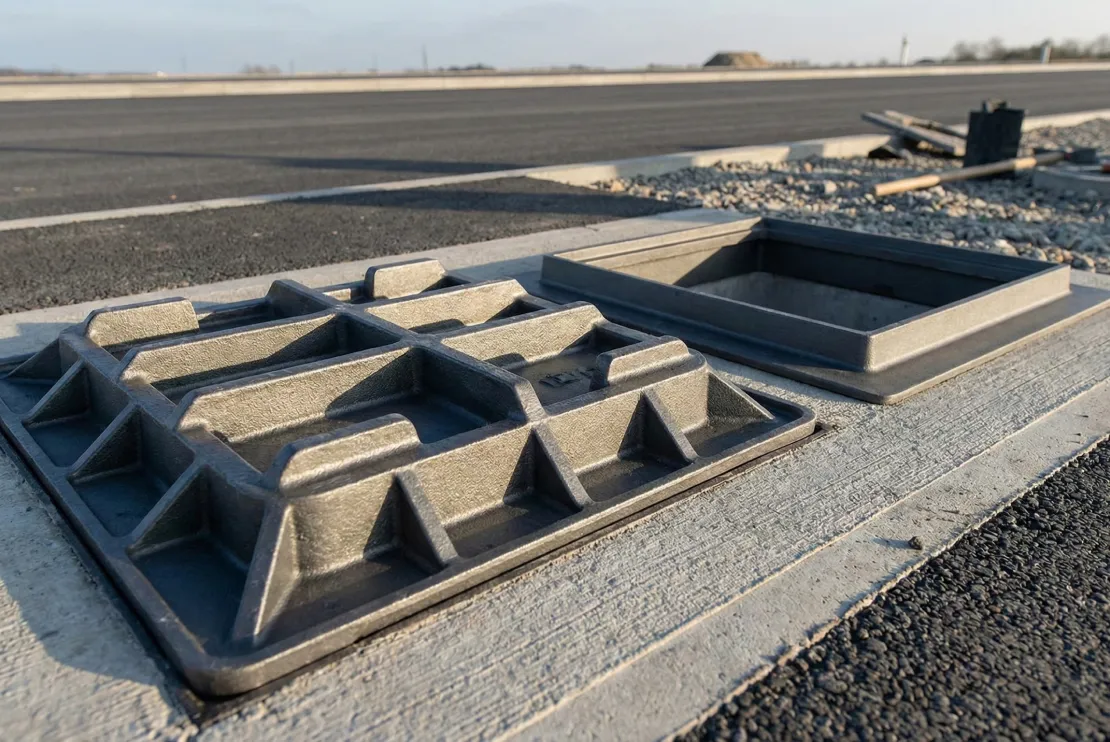
Ribbed ductile iron drainage frames have reinforced ribs or fins along the frame structure. These ribs significantly increase the strength, durability, and load-bearing capacity.
Features of Ribbed Frames:
- Reinforced with vertical or diagonal ribs
- Superior rigidity and weight distribution
- Improved anchorage with surrounding concrete
- Greater durability under heavy traffic
Ribbed frames are ideal for highways, industrial areas, ports, airports, and coastal projects, supporting both DI drainage gratings and ductile iron drainage manhole covers.
Structural Comparison: Ribbed vs. Plain DI Drainage Frames
| Feature | Ribbed DI Drainage Frame | Plain DI Drainage Frame |
|---|---|---|
| Load-Bearing Performance | Handles high-impact vehicle loads | Suitable for pedestrian/light traffic |
| Anchorage & Stability | Ribs interlock with concrete | Relies on surface adhesion |
| Vibration & Fatigue Resistance | High resistance to repeated traffic stress | More prone to fatigue under heavy loads |
| Installation Requirements | Requires proper embedding | Easier to install |
| Lifespan & Durability | Longer, lower risk of cracking | Reliable, but wears faster in demanding environments |
Advantages of Ribbed DI Drainage Frames
Ribbed ductile iron drainage products offer several key benefits:
- Superior Load-Bearing Capacity: Ribs distribute weight efficiently, supporting heavy vehicles and industrial traffic.
- Enhanced Stability: Ribbed frames interlock with concrete, preventing shifting or displacement.
- Better Fatigue Resistance: Continuous vibration from traffic is absorbed by the reinforced structure.
- Longer Lifespan: Reduced risk of cracks and damage over decades of use.
Advantages of Plain DI Drainage Frames
Plain ductile iron drainage products also have advantages in the right context:
- Cost-Effective: Lower manufacturing and installation costs.
- Ease of Installation: Lightweight design makes deployment faster.
- Sufficient for Light Loads: Perfect for sidewalks, residential areas, and low-traffic zones.
- Reliable Performance: Durable for moderate traffic with minimal maintenance.
Applications of Ribbed and Plain DI Drainage Frames
Ribbed DI Drainage Frames – Best For:
- Highways and industrial roads
- Seaports, airports, and heavy-duty commercial areas
- Coastal infrastructure with heavy salt exposure
- Smart city zones with high traffic volume
Plain DI Drainage Frames – Best For:
- Residential lanes and footpaths
- Urban landscaping and parks
- Low-traffic municipal roads
- Pedestrian zones and light-duty areas
Why DI Drainage Products Are Ideal for Both Frame Types
Ductile iron’s natural properties make it a superior choice for both ribbed and plain frames:
- High tensile strength
- Impact and shock resistance
- Corrosion resistance
- Excellent fatigue performance
- Long operational lifespan
Nexus Cast manufactures both ribbed and plain frames using advanced ductile iron formulations that meet global standards like EN 124. This ensures maximum safety, performance, and durability.
Nexus Cast: Trusted Manufacturer of DI Drainage Products
At Nexus Cast, every DI drainage manhole cover, ductile iron drainage grating, and frame is engineered for reliability and longevity.
Key Features of Nexus Cast Products:
- Precision pattern engineering for ribbed and plain frames
- Controlled metallurgy for strength and corrosion resistance
- Automated moulding and computer-guided machining
- Rigorous load, fatigue, and corrosion testing
This ensures that ductile iron drainage products perform consistently across diverse environments, from residential streets to industrial zones and coastal infrastructure.
Strength & Load-Bearing Comparison
| Feature | DI Drainage Grating | Polymer Concrete Grating |
|---|---|---|
| Load Capacity | Heavy-duty (A15–F900) | Light pedestrian use |
| Impact Resistance | High, flexible under stress | Brittle, prone to cracks |
| Longevity | 30–50+ years | 5–10 years |
| Heavy Traffic Suitability | Excellent | Poor |
This comparison highlights the superior performance of DI drainage gratings paired with ribbed or plain frames compared to alternative materials.
Conclusion
Choosing between ribbed and plain DI drainage manhole covers and frames depends on traffic loads, installation environment, and longevity requirements:
- Ribbed frames: Best for heavy-duty applications, industrial roads, ports, airports, and coastal zones.
- Plain frames: Ideal for light-duty, low-traffic, or cost-sensitive municipal areas.
Both options leverage the strength, durability, and corrosion resistance of ductile iron drainage products, ensuring decades of reliable infrastructure performance.
With Nexus Cast, engineers, contractors, and municipal authorities get high-quality, globally compliant DI drainage gratings and ductile iron drainage manhole covers built for modern urban and industrial projects.