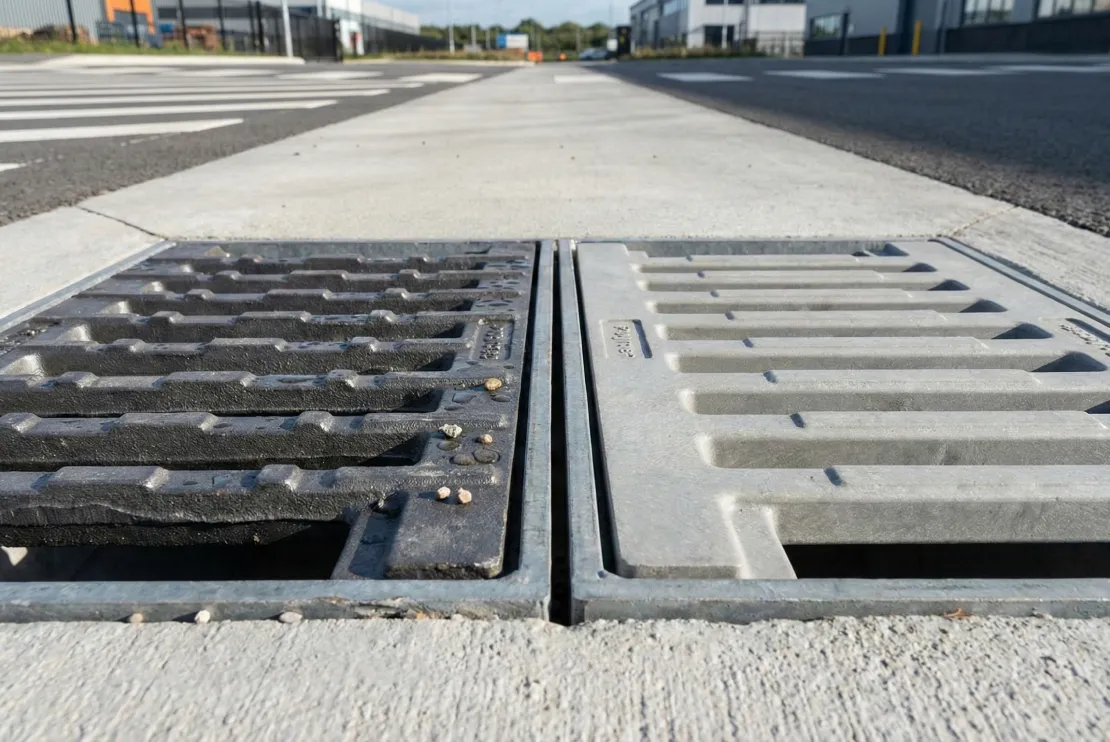
Introduction
Selecting the right Drainage product is crucial for urban infrastructure,
industrial zones, and high-traffic areas. Municipal engineers and
contractors often compare DI Drainage Grating with polymer concrete
alternatives. While both have specific applications, Ductile iron Drainage
grating systems combined with ductile iron manhole cover assemblies
consistently outperform polymer concrete in durability, load-bearing
capacity, and long-term cost-effectiveness.
In this blog, we explore the key differences, highlighting why Ductile iron
Drainage products remain the preferred choice for municipal and industrial
applications.
Strength and Load-Bearing Capacity
One of the primary advantages of DI Drainage Grating is its exceptional
load-bearing capacity. Ductile iron Drainage grating and Di Drainage manhole
cover systems can support extremely heavy loads, making them ideal for
highways, airports, ports, and industrial zones. In contrast, polymer
concrete is best suited for pedestrian areas or light-duty applications and
can crack under heavy pressure.
This table clearly shows why DI Drainage products are preferred for projects
where strength, durability, and reliability are critical.
Durability and Environmental Resistance
Another critical factor is durability. Ductile iron Drainage grating and
associated Di Drainage manhole cover systems resist corrosion, rust, and
chemical exposure. Even in coastal areas or regions with monsoon-heavy
rainfall, these Ductile iron Drainage products maintain structural integrity
over decades.
Polymer concrete, on the other hand, is UV-sensitive and brittle. Prolonged
exposure to weather, chemicals, or heavy traffic can lead to cracks, reduced
lifespan, and frequent replacements. This makes DI a more cost-effective
long-term solution for municipalities and industrial zones.
Water Flow Efficiency
Efficient water drainage is essential to prevent waterlogging and road
damage. DI Drainage Grating is engineered with optimized slot geometry and
high open-area percentages, ensuring fast water flow. Debris-resistant
patterns further reduce clogging and help maintain performance during heavy
rainfall.
Integrating ductile iron manhole cover assemblies completes the system,
allowing balanced pressure distribution and efficient stormwater drainage.
Polymer concrete gratings, due to design limitations, may restrict water
flow, increasing the risk of localized flooding.
Maintenance and Lifecycle Costs
When it comes to maintenance, Ductile iron Drainage products have a clear
advantage:
- Require minimal maintenance over 30–50+ years
- Resistant to chemical, weather, and traffic-related wear
- Seamlessly compatible with DI Drainage Grating and Ductile iron Drainage
manhole cover systems
Polymer concrete gratings may seem cheaper initially but lead to higher
long-term costs because they require frequent repairs or replacements,
especially in high-traffic areas.
Safety and Security
Safety is another critical aspect where Ductile iron Drainage products
excel.
- Di Drainage manhole cover and DI Drainage Grating systems provide high
impact resistance, reducing hazards in urban and industrial areas.
- Heavy-duty Ductile iron Drainage grating is less prone to displacement
or failure under load.
- Anti-theft features protect municipal infrastructure, a key concern with
traditional cast iron products.
Polymer concrete lacks these features, making it unsuitable for high-traffic
or critical infrastructure applications.
Environmental Sustainability
Modern infrastructure projects increasingly prioritize sustainability.
Ductile iron Drainage products are fully recyclable, long-lasting, and
environmentally friendly. By reducing replacements and waste, these systems
align with green building and municipal standards.
Polymer concrete, while sometimes touted as eco-friendly, has a shorter
lifespan and needs more frequent replacement, leading to higher material
waste over time.
Installation and Versatility
Installing Ductile iron Drainage products is straightforward due to modular
designs and compatibility with a wide range of DI Drainage Grating and
Ductile iron Drainage manhole cover assemblies. They adapt easily to
industrial, commercial, and municipal specifications.
Polymer concrete, by contrast, is brittle and more difficult to handle
during installation, especially in heavy-duty environments, limiting its
versatility.
Performance under typical conditions:
| Feature |
DI Drainage Grating |
Polymer Concrete Grating |
| Load Capacity |
Heavy-duty (A15–F900) |
Light pedestrian use |
| Impact Resistance |
High, flexible under stress |
Brittle, prone to cracks |
| Longevity |
30–50+ years |
5–10 years |
| Heavy Traffic Suitability |
Excellent |
Poor |
Conclusion
When comparing DI Drainage Grating, Ductile iron Drainage grating, and Di
Drainage manhole cover systems with polymer concrete, the advantages of
ductile iron are clear. The combination of superior load capacity, long-term
durability, efficient water flow, minimal maintenance, safety, environmental
sustainability, and installation versatility makes Ductile iron Drainage
products the preferred solution for modern urban and industrial drainage
networks.
Key Takeaway: For high-traffic roads, industrial sites, and urban drainage
networks, Ductile iron Drainage products are the superior choice. Investing
in DI ensures long-term infrastructure performance, reduced maintenance
costs, and reliable urban water management.